


Table of Contents
- Benefits of Joining a Group Therapy Support Circle in Las Vegas, NV
- What Is a Group Therapy Support Circle?
- Why Group Therapy Can Feel Less Lonely
- How Group Therapy Builds Coping Skills
- Group Therapy Support for Anxiety, Depression, Trauma, and Stress
- Group Therapy for Substance Use and Recovery
- How Group Therapy Can Work With Individual Therapy
- How Group Therapy Can Work With Psychiatry
- What to Expect in a Group Therapy Support Circle
- Who May Benefit From Group Therapy in North Las Vegas, NV & Las Vegas, NV
- How Medicaid and Access Can Make Group Therapy Easier
- Next Steps for Group Therapy in North Las Vegas, NV & Las Vegas, NV
- FAQs About Group Therapy Support Circles in Las Vegas, NV
- Sources
Benefits of Joining a Group Therapy Support Circle in Las Vegas, NV
Benefits of Joining a Group Therapy Support Circle in Las Vegas, NV start with something many people need but do not always say out loud: a place where they do not feel alone. Anxiety, depression, trauma, grief, family stress, substance use, and daily pressure can make people feel cut off from others. A group therapy support circle can give clients a guided space to speak, listen, learn, and grow with people who understand similar struggles.
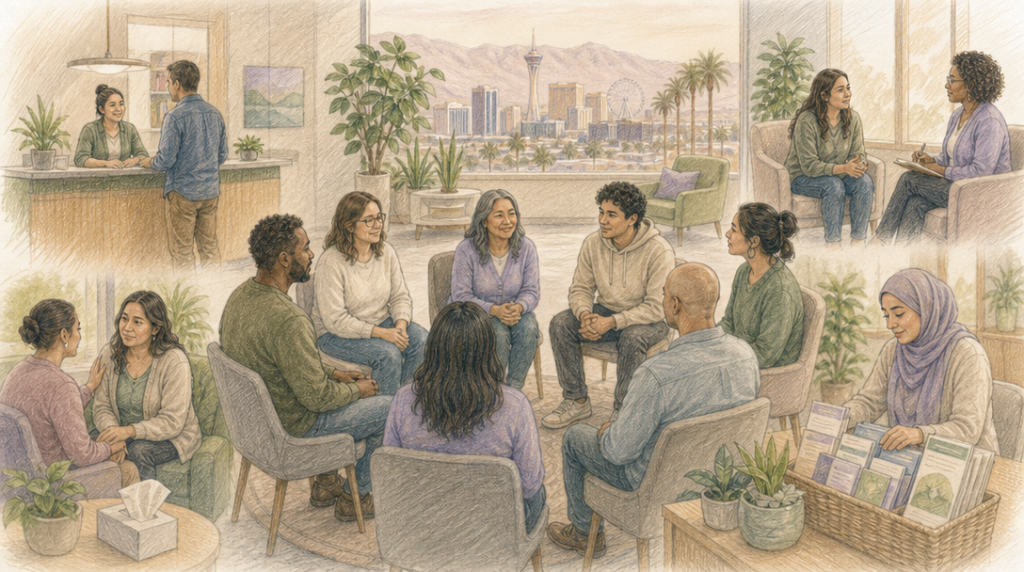
A group therapy support circle is not the same as chatting with friends. It is a structured mental health setting led by a trained therapist or clinical team. The group may focus on coping skills, emotional support, recovery, grief, anxiety, depression, trauma, relapse prevention, life skills, or another shared concern. The American Psychological Association explains that group therapy often includes one or more psychologists leading a group of about five to fifteen people, often meeting weekly.
For clients in North Las Vegas, NV & Las Vegas, NV, group therapy may be a good fit when one-on-one therapy feels too lonely, when family support is limited, or when a person wants to learn from others who are walking through similar challenges. At Miracle Minds Therapy, clients can ask about group therapy, individual therapy, family therapy, trauma therapy, anxiety therapy, depression counseling, substance use treatment, telehealth, psychiatry, Medicaid help, and resource navigation.
Here is why this matters. Healing can feel harder when people feel isolated. A group therapy support circle can create a steady place to practice healthier communication, hear other points of view, and learn coping tools in real time. For many people, that shared setting makes care feel more human.

Miracle Minds Therapy serves North Las Vegas, NV & Las Vegas, NV, accepts Medicaid, has open appointments, and works with children, teens, adults, elders, and families. To ask about group therapy support circles, call (702) 888-6300 or visit https://mmtnv.org/contact-us.
What Is a Group Therapy Support Circle?
A group therapy support circle is a form of talk therapy where several people meet with a trained mental health worker to talk about shared concerns. The National Institute of Mental Health describes psychotherapy as treatment that helps people identify and change troubling emotions, thoughts, and behaviors, and notes that psychotherapy can take place one-on-one or with other patients in a group setting.
In a group therapy support circle, the therapist guides the session. Members may share experiences, practice coping skills, learn about mental health, discuss goals, and listen to others. The group may be open, which means new members can join, or closed, which means the same people meet for a set period.
A group therapy support circle may focus on:
- Anxiety
- Depression
- Trauma
- Grief
- Stress
- Anger
- Social skills
- Parenting stress
- Teen mental health
- Substance use recovery
- Relapse prevention
- Dual diagnosis
- Life skills
- Family stress
- Coping with major change
The real question is not whether group therapy is better than individual therapy. The real question is whether group therapy fits your needs right now. Some clients attend group therapy only. Others attend group therapy while also seeing a therapist one-on-one or meeting with a psychiatrist.
Why Group Therapy Can Feel Less Lonely
Mental health struggles can trick people into thinking they are the only ones dealing with pain. A person may think, “No one else feels this anxious,” or “My family is the only one like this,” or “I should be able to handle this by myself.” Group therapy can challenge that belief in a safe setting.
When clients hear others speak honestly, they may feel relief. They may think, “That sounds like me,” or “I have felt that too.” That moment can lower shame.
Group therapy can help people feel less alone by giving them:
- A regular place to be heard
- A chance to listen to others with similar concerns
- A sense of shared effort
- Practice speaking honestly
- Practice receiving feedback
- Gentle accountability
- A safe place to learn from others
Now here’s the thing: group therapy does not mean everyone has the same story. Each person brings different experiences, family patterns, symptoms, beliefs, and goals. That mix can help group members see problems from new angles.
For people in North Las Vegas, NV & Las Vegas, NV, this can be especially meaningful when family, work, school, money stress, or cultural stigma makes it hard to talk openly at home. A group therapy support circle can create a place where people do not have to carry everything in silence.
How Group Therapy Builds Coping Skills
A major benefit of group therapy is that clients can learn coping skills while seeing how others use them. Coping skills are not just ideas on paper. They are habits people practice when anxiety rises, sadness hits, cravings show up, anger builds, or old trauma gets triggered.
In a group therapy support circle, a therapist may teach skills such as:
- Naming emotions
- Breathing and grounding
- Noticing negative thought patterns
- Setting boundaries
- Asking for support
- Managing conflict
- Planning for triggers
- Creating safety plans when needed
- Building recovery routines
- Practicing healthier communication
- Handling stress without shutting down
- Taking small steps when depression lowers motivation
Let’s break it down. If someone is struggling with anxiety, they may learn how another group member handles panic before work. If someone is dealing with depression, they may hear how another person gets through low-energy days. If someone is working on recovery, they may learn how another person avoids relapse triggers during family conflict.
That shared learning can make skills feel more doable. It also gives people a place to practice. A client who avoids speaking up may try sharing for two minutes. A client who gets angry quickly may practice listening before responding. A client who feels shame may practice accepting encouragement.
Group therapy does not replace real-life practice, but it can help clients rehearse healthier responses before they face stressful moments outside the session.
Group Therapy Support for Anxiety, Depression, Trauma, and Stress
Group therapy support circles can be useful for many mental health concerns. Mayo Clinic lists psychotherapy as a treatment approach that may be used for anxiety disorders, mood disorders, addictions, and other mental health concerns.
Group Therapy Support for Anxiety
Anxiety can make people avoid places, conversations, school, work, or social situations. In group therapy, clients can learn that anxiety often grows when it is hidden. A support circle may help clients name fears, learn grounding tools, and take small steps toward situations they have been avoiding.
For clients in North Las Vegas, NV & Las Vegas, NV, anxiety therapy may also connect with individual therapy, psychiatry, or medication support when needed. Miracle Minds Therapy helps clients ask about anxiety therapy, psychiatric evaluation, and anxiety medication support.
Group Therapy Support for Depression
Depression often tells people to pull away. Group therapy can gently push back against isolation. It can give clients a reason to show up, speak, listen, and stay connected.
A support circle may help people with depression talk about low motivation, sleep changes, hopeless thoughts, grief, guilt, family pressure, or loss of interest. It may also help clients build small routines and notice progress that they might miss on their own.
Group Therapy Support for Trauma
Trauma can make people feel unsafe in their body, relationships, or community. Group therapy for trauma must be handled with care. The goal is not to force painful stories. The goal is to build safety, coping skills, trust, and emotional stability at a pace that fits the group.
Some clients may need individual trauma therapy before joining a trauma-focused group. Others may do both. Miracle Minds Therapy can help clients ask what type of care may fit their trauma symptoms.
Group Therapy Support for Stress
Stress can come from work, caregiving, school, parenting, housing, money, health, relationships, or legal worries. In a group setting, clients can learn stress management skills and hear how others handle pressure.
What this means is simple: group therapy can help people stop treating stress as a private failure and start treating it as something they can manage with support.
Group Therapy for Substance Use and Recovery
Group therapy is often used in substance use treatment and recovery care. SAMHSA’s group therapy materials explain that group therapy has been used in substance use treatment to teach coping skills, support recovery, and help people learn from others in treatment.
Substance use can carry shame, secrecy, grief, anger, and fear. A group therapy support circle can give clients a place to talk about cravings, triggers, relapse warning signs, relationships, family stress, and recovery goals.
Group therapy for substance use may focus on:
- Relapse prevention
- Coping with cravings
- Understanding triggers
- Repairing trust
- Managing emotions without using
- Building sober routines
- Learning from setbacks
- Talking about shame
- Setting boundaries
- Planning for high-risk situations
- Dual diagnosis needs
Miracle Minds Therapy helps clients in North Las Vegas, NV & Las Vegas, NV ask about drug treatment, addiction counseling, outpatient substance use treatment, Intensive Outpatient Program, Medication-Assisted Treatment, dual diagnosis, relapse prevention, recovery support, peer support, psychosocial rehabilitation, and life skills.
Clients who are dealing with both mental health symptoms and substance use can ask about Dual Diagnosis. This can matter when depression, anxiety, trauma, bipolar disorder, ADHD, psychosis symptoms, or grief are connected to substance use patterns.
The catch is that group therapy should match the person’s stage of care. Someone in early recovery may need a different group than someone working on long-term relapse prevention. The intake team can help sort through those options.
How Group Therapy Can Work With Individual Therapy
Group therapy and individual therapy can work well together. Individual therapy gives clients private time with a therapist. Group therapy gives clients a shared setting where they can practice skills and learn from others.
A client may use individual therapy to talk through personal trauma, private family history, safety concerns, or goals they are not ready to share in a group. Then they may use group therapy to practice communication, coping skills, and connection.
Here is why pairing both can help:
- Individual therapy gives private support.
- Group therapy reduces isolation.
- Individual therapy can focus on personal history.
- Group therapy can build social confidence.
- Individual therapy can prepare clients for group sharing.
- Group therapy can help clients practice skills with others.
- Individual therapy can review what came up after group.
At Miracle Minds Therapy, clients can ask about individual therapy and counseling along with group therapy. Teens, adults, parents, elders, and people in recovery may all benefit from different care combinations.
No one should feel pressured into a group before they are ready. A therapist can help decide whether group therapy, individual therapy, family therapy, psychiatry, or resource navigation should come first.
How Group Therapy Can Work With Psychiatry
Some clients in group therapy also need psychiatric care. Psychiatry can help with diagnosis questions, medication needs, medication review, refills, side effects, and follow-up care. Group therapy can help clients build coping skills, talk about symptoms, and stay connected between psychiatry visits.
Miracle Minds Therapy offers Psychiatric Evaluation for clients in North Las Vegas, NV & Las Vegas, NV. Clients can ask about psychiatric medication management, medication review and refills, anxiety medication support, depression medication support, bipolar disorder medication support, ADHD medication support, and psychosis medication support.
Group therapy may support psychiatry care by helping clients:
- Talk about mood changes
- Notice stress triggers
- Build medication routines
- Share concerns with the care team
- Practice coping tools
- Reduce isolation
- Stay engaged in care
- Track changes in daily life
Group therapy is not a replacement for medication care when medication is part of the treatment plan. It can be one part of a fuller care plan.
If symptoms feel intense, confusing, or unsafe, clients should tell the care team. If there is immediate danger or a mental health emergency, call 911 or go to the nearest emergency room.
What to Expect in a Group Therapy Support Circle
Joining a group therapy support circle may feel uncomfortable at first. That is normal. Many people worry about what to say, whether they will be judged, or whether they have to tell their whole story.
In most groups, you can expect:
A Trained Group Leader
A therapist or clinical team member guides the session, keeps the group on topic, and helps the space stay respectful.
Clear Group Rules
Group therapy usually includes rules about privacy, respectful listening, attendance, safety, and how members talk to each other.
A Shared Focus
Some groups focus on anxiety, depression, trauma, recovery, parenting, life skills, grief, or another concern. The shared focus helps members know why they are there.
Time to Talk and Listen
You may not talk a lot in the first session. That is okay. Many people start by listening. Over time, sharing may feel easier.
Coping Tools and Practice
Groups often include skill-building. You may learn breathing tools, grounding, communication skills, relapse prevention planning, boundary setting, or ways to manage emotions.
Feedback From Others
Group members may offer encouragement or share what helped them. The therapist helps keep feedback respectful and useful.
Bottom line, you do not need to be perfect at group therapy. You only need to show up, listen, try, and be honest at your own pace.
Who May Benefit From Group Therapy in North Las Vegas, NV & Las Vegas, NV
Group therapy support circles can benefit many people, but fit matters. A group should match the person’s age, symptoms, goals, safety needs, and comfort level.
Group therapy may be helpful for:
- Teens dealing with stress, anxiety, depression, or school pressure
- Adults feeling isolated, overwhelmed, or stuck
- Parents needing support with stress or family conflict
- People working through grief
- Clients healing from trauma
- People learning coping skills
- Clients in recovery from substance use
- People with dual diagnosis needs
- Elders facing loneliness, grief, or life changes
- Clients who want added support with individual therapy
- People who want to practice communication skills
Group therapy may not be the first fit for every person. Someone in active crisis, someone who needs private trauma work first, or someone with safety concerns may need another form of care before joining a group. The best next step is to ask during intake.
Miracle Minds Therapy works with children, teens, adults, elders, and families in North Las Vegas, NV & Las Vegas, NV. The team can help clients ask about group therapy, individual therapy, family therapy, psychiatric care, substance use treatment, telehealth, and resource navigation.
How Medicaid and Access Can Make Group Therapy Easier
Access matters. A person may want group therapy but still struggle with cost, Medicaid questions, transportation, child care, work schedules, school schedules, or housing stress.
Miracle Minds Therapy accepts Medicaid and helps clients ask about behavioral health care options in North Las Vegas, NV & Las Vegas, NV. Clients can ask about Medicaid Provider Help when they need help finding care for counseling, psychiatry, medication review, refills, or follow-up needs.
The Community-Based Program page states that Miracle Minds Therapy offers low-cost on-site, community, and virtual therapy for Las Vegas and North Las Vegas residents. This can matter for clients who need therapy but face transportation, money, mobility, or scheduling barriers.
Miracle Minds Therapy can also help clients ask about resource and social-services navigation, such as:
- Homeless Services Help
- Low-income housing help
- Food and SNAP help
- WIC and new mother resources
- Free diapers and baby supplies
- Utility and electric bill help
- Job and workforce help
- Transportation help
- Care coordination and follow-up
Mental health care can be harder to keep up with when daily needs are not met. A client may need group therapy and transportation help. Another may need recovery support and food resources. A parent may need counseling while also needing diapers or WIC help.
Miracle Minds Therapy helps clients talk about those needs instead of pretending they do not affect care.
Next Steps for Group Therapy in North Las Vegas, NV & Las Vegas, NV
If you are thinking about joining a group therapy support circle, you do not need to know every answer before calling. You can start with a simple request: “I want to ask about group therapy.”
Step 1: Name What You Want Support With
Write down the issue that made you search for group therapy. It may be anxiety, depression, trauma, grief, recovery, stress, anger, parenting, isolation, or life skills.
Step 2: Ask About Group Fit
When you call, ask what groups may be available and whether they match your age, needs, schedule, and care goals.
Step 3: Ask About Medicaid and Access
Ask whether Medicaid is accepted, what documents to bring, and whether telehealth or community-based care may fit your situation.
Step 4: Ask About Other Services Too
Group therapy may be one part of care. Ask about individual therapy, family therapy, psychiatric evaluation, medication support, substance use treatment, peer support, life skills, or resource navigation if needed.
Step 5: Try the First Session With an Open Mind
It is normal to feel nervous. You can listen first. Over time, the group may become a place where you can speak more freely, learn new skills, and feel less alone.
Benefits of Joining a Group Therapy Support Circle in Las Vegas, NV include connection, accountability, coping skills, shared learning, and access to guided care. For clients in North Las Vegas, NV & Las Vegas, NV, Miracle Minds Therapy offers Medicaid-accepting care, open appointments, therapy, psychiatry, recovery support, telehealth options, and resource navigation.
Call (702) 888-6300 or visit https://mmtnv.org/contact-us to ask about group therapy support circles.
FAQs About Group Therapy Support Circles in Las Vegas, NV
1. What is a group therapy support circle?
A group therapy support circle is a guided therapy session where several people meet with a trained mental health worker to talk about shared concerns, learn coping skills, and support each other.
2. What are the benefits of group therapy?
Group therapy can help people feel less alone, learn coping skills, hear from others with similar struggles, practice communication, and build accountability. It can also work with individual therapy, family therapy, psychiatry, or substance use treatment.
3. Is group therapy private?
Group therapy usually has privacy rules that members are asked to follow. The therapist explains group expectations before or during the first session. Clients should ask about privacy, safety, and group rules during intake.
4. Does Miracle Minds Therapy offer group therapy in North Las Vegas, NV & Las Vegas, NV?
Yes. Miracle Minds Therapy helps clients ask about group therapy, individual therapy, family therapy, trauma therapy, anxiety therapy, depression counseling, substance use treatment, psychiatry, telehealth, and Medicaid help in North Las Vegas, NV & Las Vegas, NV.
5. Can group therapy help with substance use recovery?
Yes. Group therapy can be part of substance use care and recovery support. Clients can ask Miracle Minds Therapy about addiction counseling, outpatient substance use treatment, IOP, MAT, dual diagnosis, relapse prevention, and recovery support.
6. Can I attend group therapy and individual therapy at the same time?
Yes. Many clients attend both. Individual therapy gives private one-on-one support, while group therapy gives shared support, skill practice, and connection with others.
7. How do I ask about joining a group therapy support circle?
Call Miracle Minds Therapy at (702) 888-6300 or visit https://mmtnv.org/contact-us. The office is open Monday through Friday from 9 AM to 5:30 PM and serves North Las Vegas, NV & Las Vegas, NV.
Sources
- Psychotherapies, National Institute of Mental Health, Publication date not listed.
- Psychotherapy: Understanding Group Therapy, American Psychological Association, October 31, 2019.
- Group Therapy: What It Is, How It Works, Benefits & Types, Cleveland Clinic, December 16, 2025.
- Group Therapy in Substance Use Treatment, Substance Abuse and Mental Health Services Administration, 2020.
- Miracle Minds Therapy, Miracle Minds Therapy, Accessed May 26, 2026.
- Medicaid Provider Help, Miracle Minds Therapy, Accessed May 26, 2026.
- Psychiatric Evaluation, Miracle Minds Therapy, Accessed May 26, 2026.
- Dual Diagnosis, Miracle Minds Therapy, Accessed May 26, 2026.
- Community-Based Program, Miracle Minds Therapy, Accessed May 26, 2026.
- Homeless Services Help, Miracle Minds Therapy, Accessed May 26, 2026.
- Contact Us, Miracle Minds Therapy, Accessed May 26, 2026.