



Support for new mothers in North Las Vegas, NV & Las Vegas, NV can include WIC nutrition benefits, help finding diapers and baby supplies, Medicaid assistance, and mental health counseling during pregnancy and after childbirth. Having a baby changes daily life quickly. Between feeding schedules, medical appointments, sleep loss, and household responsibilities, even simple tasks can become difficult.
Some mothers are also dealing with postpartum depression, anxiety, financial stress, housing concerns, or uncertainty about where to find help. You might need information about WIC one day and a therapist to talk with the next. Both needs deserve attention.
At Miracle Minds Therapy, we provide mental health counseling, psychiatric services, and social-services navigation for parents and families throughout North Las Vegas, NV & Las Vegas, NV. Our nonprofit organization accepts Medicaid, has immediate openings, and helps families connect with resources for food, diapers, baby supplies, housing, transportation, and other everyday needs.
Whether you are pregnant, recently delivered, breastfeeding, caring for an infant, or helping a loved one through postpartum challenges, knowing what resources are available can make the next steps easier.
Table of Contents
- Why New Mothers May Need Several Types of Support
- WIC Resources for New Mothers
- Who Qualifies for Nevada WIC?
- How to Apply for WIC
- Free Diapers and Baby Supplies
- Food, SNAP and Formula Resources
- Postpartum Mental Health Support
- Baby Blues vs. Postpartum Depression
- Postpartum Anxiety and Birth Trauma
- Therapy and Psychiatric Care for New Mothers
- Telehealth Counseling for New Parents
- Medicaid Help for Mothers and Babies
- Housing and Transportation Resources
- How Partners and Families Can Help
- Getting Help From Miracle Minds Therapy
- Frequently Asked Questions
- Sources and References
Why Support for New Mothers Matters After Childbirth
Becoming a parent involves much more than caring for a newborn.
Mothers are also recovering physically, adapting to hormonal changes, managing sleep interruptions, and adjusting to new responsibilities.
Some are raising older children, returning to work, recovering from a C-section, or handling parenting without much outside help.
Financial concerns can make this period even harder.
A mother may be worried about having enough diapers until the next paycheck. Another may be having trouble buying groceries or finding transportation to medical appointments.
Someone else may have plenty of baby supplies but feel anxious, sad, or emotionally disconnected after giving birth.
Here is what matters.
Support for new mothers should account for both emotional health and everyday needs.
Finding diapers does not replace mental health treatment. Counseling does not make food or housing problems disappear.
When both concerns are addressed, parents have a better chance of staying connected with the help they need.
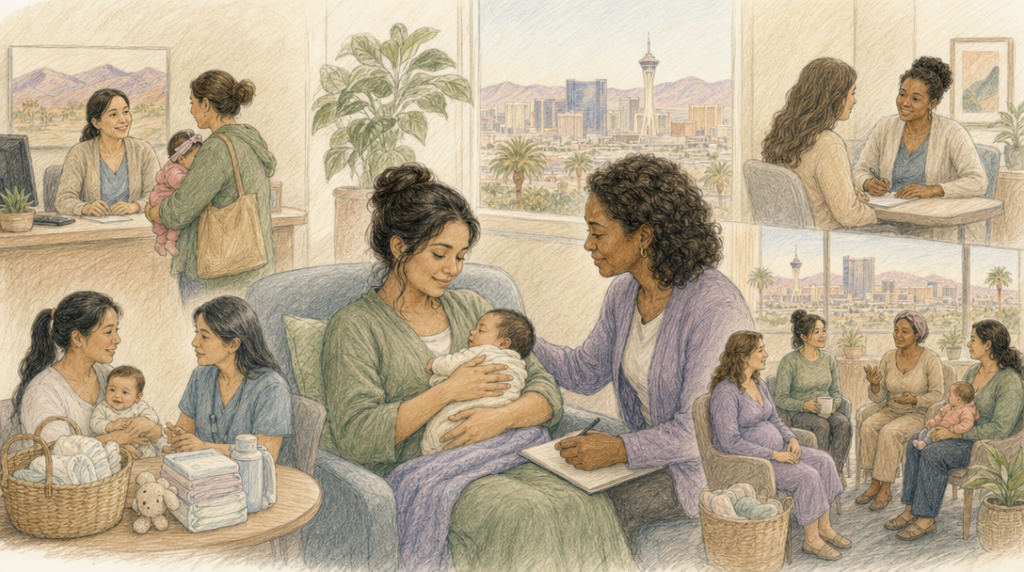
Miracle Minds Therapy works with families who need therapy, psychiatry, Medicaid guidance, or assistance finding community resources.
WIC Resources: Nutrition Support for New Mothers and Babies
One of the most useful programs for eligible pregnant and postpartum families is WIC.
WIC stands for the Special Supplemental Nutrition Program for Women, Infants, and Children.
The program provides nutrition-related benefits and services for eligible pregnant women, postpartum mothers, infants, and young children.
According to Nevada WIC, the program helps families access approved foods, nutrition education, breastfeeding support, and referrals to health and community services.
What Does Nevada WIC Provide?
Depending on eligibility and the participant’s approved food package, WIC benefits may include:
- Approved infant formula
- Infant foods
- Fruits and vegetables
- Milk and approved alternatives
- Eggs
- Whole grains
- Peanut butter or beans
- Nutrition education
- Infant-feeding guidance
- Breastfeeding information and support
Nevada WIC updated its food packages effective March 1, 2026. Families can review current WIC food benefits to understand which approved foods may be available.
Not every participant receives the same foods or quantities.
Benefits depend on factors such as the participant’s age, pregnancy or postpartum status, and infant-feeding needs.
Can WIC Help With Breastfeeding?
Yes.
Nevada WIC offers breastfeeding education, support, and referrals. Qualifying participants may also receive breast pumps and breastfeeding accessories.
If you are breastfeeding and having trouble with milk supply, pumping, feeding schedules, or other concerns, contact your WIC clinic to ask what services are available.
You can learn more through Nevada WIC’s breastfeeding support resources.
Families looking for support for new mothers can also contact Miracle Minds Therapy for help identifying WIC-related resources and discussing other needs.
Our team provides resource navigation rather than administering WIC benefits directly.
Who Qualifies for Nevada WIC?
WIC eligibility depends on residency, income, nutrition-related requirements, and the person’s pregnancy, postpartum, or caregiver status.
According to Nevada WIC, applicants generally must live in Nevada, meet applicable income guidelines, have a qualifying health or nutrition need, and fall into an eligible category.
Those categories include:
- People who are currently pregnant
- Mothers who had a baby within the past six months
- Breastfeeding mothers with babies younger than one year
- Infants and children younger than five years old who meet program requirements
Parents and caregivers other than the birth mother may also apply on behalf of an eligible child.
That can include fathers, grandparents, foster parents, and legal guardians.
Nevada WIC states that U.S. citizenship is not required to participate in the program.
What If You Already Receive Medicaid or SNAP?
Tell your WIC clinic if you already receive Nevada Medicaid, SNAP, or other public assistance benefits.
Participation in certain assistance programs may help establish income eligibility, although WIC enrollment still involves its own application and screening process.
Do not assume you are ineligible without checking the current requirements.
For the most accurate information, review Nevada WIC eligibility guidelines.
How to Apply for WIC in North Las Vegas, NV & Las Vegas, NV
Applying for WIC generally begins by contacting a local WIC clinic.
Nevada WIC provides a clinic locator to help families identify a location and request an appointment.
What Documents Might You Need?
Nevada WIC advises applicants to prepare documents that establish:
- Identity
- Nevada residency
- Household income
Your WIC clinic can explain which documents it accepts and whether any other information is needed.
You can also ask about language assistance, appointment arrangements, and what to expect during the visit.
What Happens at a WIC Appointment?
A WIC appointment may include reviewing eligibility, discussing nutrition needs, and explaining available benefits.
For families with infants, staff may also discuss feeding practices and related concerns.
If you are unsure where to begin, Miracle Minds Therapy offers WIC and new mothers resource help.
Our team can listen to your situation and help you identify appropriate resource contacts.
Where Can New Mothers Find Free Diapers and Baby Supplies?
Diapers, wipes, formula, clothing, and infant care items can create ongoing financial pressure.
Running out of supplies may cause stress, particularly when a parent is already managing recovery after childbirth or trying to keep up with other household expenses.
Support for new mothers may include connecting families with diaper banks, charities, community organizations, or assistance programs that provide baby supplies.
Does WIC Pay for Diapers?
No. WIC is a nutrition assistance program, not a diaper benefit program.
Although WIC may help eligible families obtain approved food and infant-feeding products, families should look to separate community resources for diapers and many other baby items.
Finding Diaper Banks Through Nevada 211
Nevada 211’s diaper assistance directory helps families search for diaper banks and distribution programs.
The directory includes programs that may provide free or reduced-cost diapers, depending on eligibility and current inventory.
You can search using your ZIP code to identify programs serving your area.
When contacting a diaper resource, ask:
- Are diapers currently available?
- What sizes do you have?
- Do I need an appointment?
- Is there an application or registration process?
- What documents should I bring?
- How often may a family request supplies?
- Are wipes, clothing, or other baby items available?
Program requirements and supply levels may change.
Baby Supplies Beyond Diapers
Some community programs may also provide or help families locate:
- Baby clothing
- Wipes
- Infant hygiene products
- Blankets
- Feeding supplies
- Safe sleep equipment
- Other infant care items
Never assume that a particular organization has these items in stock.
Miracle Minds Therapy offers free diapers and baby supplies resource guidance to help families ask about appropriate programs.
Our role is to connect families with potential assistance and related services. We do not guarantee direct distribution or availability of supplies.
Food, SNAP and Formula Resources for New Mothers
Caring for a newborn is demanding enough without worrying about the next meal.
Some families need help with groceries, while others are searching for formula or infant-feeding resources.
WIC and SNAP can serve different purposes.
What Is the Difference Between WIC and SNAP?
WIC provides approved food benefits and nutrition-related services for eligible pregnant and postpartum participants, infants, and young children.
SNAP, the Supplemental Nutrition Assistance Program, helps eligible households obtain food for the household.
A family may qualify for both programs if it meets the rules for each.
Nevada residents can learn about SNAP applications through the Nevada Division of Social Services.
What If You Need Food Right Away?
If your household has very little or no money, tell the Nevada Division of Social Services when applying for SNAP.
The state explains that households meeting certain conditions may qualify for expedited assistance.
Families may also contact local food banks and community programs through Nevada 211.
What If You Need Baby Formula?
If you already participate in WIC, ask your clinic about the formula included in your infant’s approved food package.
If you are not enrolled, ask about eligibility and available infant-feeding resources.
For questions involving allergies, formula intolerance, feeding problems, or a baby’s medical needs, speak with the child’s pediatrician.
Do not dilute formula or substitute homemade recipes when supplies are low.
Miracle Minds Therapy provides food and SNAP resource assistance alongside behavioral health services.
Postpartum Mental Health Support for New Mothers
Pregnancy and childbirth involve physical and emotional changes.
Some parents experience temporary mood changes during the first days after delivery.
Others develop depression, anxiety, trauma-related symptoms, or other mental health concerns that need professional attention.
According to the National Institute of Mental Health, perinatal depression can occur during pregnancy or after childbirth and may interfere with everyday responsibilities and relationships.
Common Signs of Postpartum Mental Health Problems
Symptoms worth discussing with a healthcare provider include:
- Feeling sad or hopeless most days
- Crying frequently
- Losing interest in activities
- Feeling unusually irritable
- Having trouble sleeping even when the baby sleeps
- Feeling constantly anxious
- Difficulty concentrating
- Feeling guilty or worthless
- Withdrawing from family or friends
- Having trouble bonding with the baby
- Feeling unable to manage daily responsibilities
- Experiencing frightening or distressing thoughts
These symptoms can have several causes. A healthcare professional can help determine what is happening.
Support for new mothers should include opportunities to discuss emotional wellbeing, not only the baby’s physical needs.
At Miracle Minds Therapy, patients can ask about individual therapy, depression counseling, anxiety therapy, and psychiatric care.
Baby Blues vs. Postpartum Depression: When Should You Get Help?
Many mothers experience mood changes shortly after childbirth.
You may feel emotional, tearful, exhausted, or overwhelmed during the first days with your baby.
These temporary experiences are often called the baby blues.
What Are the Baby Blues?
The baby blues typically involve mild mood changes during the first two weeks after childbirth.
Symptoms may include crying more easily, mood swings, worry, or feelings of sadness.
For many parents, these feelings improve as the first days and weeks pass.
How Is Postpartum Depression Different?
Postpartum depression may involve more intense symptoms, symptoms that interfere with daily functioning, or changes that continue beyond the first two weeks.
A mother experiencing postpartum depression may feel persistently hopeless, disconnected, anxious, or unable to enjoy things she previously liked.
Some parents experience difficulty bonding with their baby.
Others continue caring for their children while experiencing distress that people around them may not notice.
The real question is not whether you appear to be managing everything.
It is whether your symptoms are affecting your wellbeing and whether you need additional help.
You can seek an assessment at any time. Severe symptoms deserve prompt attention even within the first two weeks.
Can Postpartum Depression Be Treated?
Yes.
NIMH identifies psychotherapy, medication, or a combination of both as treatment options for perinatal depression.
A mental health provider can discuss your symptoms and explain appropriate care.
If you are breastfeeding, pregnant, or taking medication, make sure your prescribing provider knows so treatment decisions account for those circumstances.
Postpartum Anxiety and Birth Trauma Support
Not every new mother experiencing emotional distress feels depressed.
Some experience anxiety that makes it difficult to relax or feel safe.
A mother may repeatedly check whether her baby is breathing, worry constantly about illness, or find herself unable to stop thinking about something going wrong.
Other parents are affected by frightening experiences during childbirth.
An emergency C-section, medical complication, difficult labor, or unexpected hospitalization may leave distressing memories.
When Might Anxiety Counseling Help?
Consider talking with a counselor when worry:
- Interferes with sleep
- Causes frequent panic or fear
- Makes everyday decisions difficult
- Affects relationships
- Prevents you from leaving home
- Leads to repeated distressing thoughts
- Makes medical appointments frightening
Miracle Minds Therapy provides anxiety counseling and trauma therapy.
If your symptoms are connected with pregnancy or childbirth, tell the intake team so they can discuss available services and whether a provider with relevant perinatal experience is available.
Therapy and Psychiatric Care for New Mothers
Many parents think counseling is only for severe mental health conditions.
Yet therapy can also help people work through emotional changes, grief, stress, relationship concerns, and adjustment after childbirth.
During counseling, you may discuss:
- Feelings about becoming a parent
- Postpartum depression symptoms
- Anxiety about your baby’s safety
- Relationship changes
- Lack of sleep
- Difficult birth experiences
- Family conflict
- Grief or pregnancy loss
- Feeling isolated
- Financial stress
- Concerns about returning to work
A therapist can help you identify patterns, discuss coping strategies, and work toward goals that make sense for your situation.
Can Family Therapy Help New Parents?
Yes.
A new baby can change how household responsibilities, communication, and relationships work.
Some partners disagree about childcare duties or feel disconnected because they are exhausted.
Other families are adjusting to help from grandparents, relatives, or caregivers.
Family therapy may help families discuss expectations, communication, emotional needs, and sources of conflict.
What About Psychiatric Medication?
Some people need psychiatric evaluation or medication support alongside counseling.
Miracle Minds Therapy provides psychiatric medication management and psychiatric evaluations.
A qualified prescriber can discuss whether medication may be appropriate based on your symptoms, medical history, and individual circumstances.
Medication decisions during pregnancy or breastfeeding should be made with the prescribing clinician, with coordination from other healthcare professionals when needed.
Telehealth Counseling for New Mothers With Busy Schedules
Leaving home for an appointment is not always easy when you are caring for a newborn.
You may be recovering from childbirth, feeding your baby frequently, or caring for older children.
Transportation can also be difficult, especially when a family shares one vehicle or relies on public transit.
Teletherapy allows eligible patients to attend counseling appointments remotely.
Miracle Minds Therapy provides teletherapy services when virtual care is appropriate for the person’s needs.
What Can You Discuss During Teletherapy?
A virtual counseling appointment may involve many of the same concerns discussed during in-person therapy:
- Anxiety
- Depression
- Grief
- Trauma
- Family stress
- Parenting concerns
- Sleep-related difficulties
- Coping with major life changes
Teletherapy can be useful for support for new mothers who have difficulty traveling to an office regularly.
Your provider can help determine whether telehealth fits your treatment needs or whether in-person care would be more appropriate.
Medicaid Help for New Mothers and Babies
Health insurance questions can be confusing during pregnancy and after delivery.
Families may be unsure about coverage, provider networks, paperwork, or how to find a counselor who accepts Medicaid.
Miracle Minds Therapy accepts Medicaid and provides Medicaid help and resource guidance.
Does Medicaid Cover Postpartum Mental Health Treatment?
Nevada Medicaid may cover qualifying mental health services, including counseling and psychiatric care, depending on the person’s eligibility, health plan, provider network, and applicable authorization requirements.
Coverage for a specific service should be confirmed with the Medicaid plan and provider.
What Should You Ask About Coverage?
When contacting our office, consider asking:
- Do you accept my Nevada Medicaid plan?
- Can I request counseling for postpartum depression or anxiety?
- Are teletherapy appointments available?
- Can I ask about psychiatric medication support?
- What information is needed for intake?
- Are there resources for WIC, diapers, or food assistance?
You do not need to decide which type of mental health service you require before calling.
Explain what you are experiencing and what support you need.
Housing, Utility and Transportation Help for Growing Families
Some new mothers are trying to care for their babies while facing housing instability, utility problems, or transportation concerns.
A mother may need to attend a postpartum appointment but have no dependable transportation.
Another family may be struggling to stay current on rent or electric bills.
These situations can add stress during a period when parents are already adjusting to major changes.
Miracle Minds Therapy provides resource navigation for families seeking information about:
- Low-income housing help
- Homeless services
- Utility and electric bill help
- Transportation assistance
- Job and workforce resources
Assistance from outside programs depends on eligibility, available resources, and each organization’s requirements.
Our team can help families ask about these resources while discussing mental health needs.
How Partners and Families Can Support New Mothers
Family members and partners can make a difference during the weeks and months after childbirth.
Support does not always need to involve a long conversation.
Sometimes it means taking care of household chores so a mother can rest.
Other times it means helping arrange a WIC appointment or finding someone to watch the baby during counseling.
Ways to Help a New Mother
Partners, relatives, and friends can:
- Help prepare meals
- Share childcare responsibilities
- Assist with errands
- Pick up groceries or diapers
- Offer transportation to appointments
- Listen without judging
- Ask how the parent is feeling
- Help with benefit applications
- Encourage mental health care when symptoms appear
- Respect the parent’s preferences and boundaries
What If a New Mother Seems Depressed?
Avoid dismissing symptoms as something every new parent experiences.
If someone seems persistently sad, anxious, withdrawn, or overwhelmed, encourage them to speak with a healthcare professional.
Offer help making an appointment or finding a time when they can talk privately.
For immediate emotional support, the National Maternal Mental Health Hotline is available around the clock.
Call or text 1-833-852-6262 to reach trained counselors.
When Is Emergency Care Needed?
Postpartum psychosis is a medical emergency.
Symptoms can include hallucinations, delusions, severe confusion, or behavior that suggests someone is losing touch with reality.
If a mother experiences these symptoms, seek emergency medical care immediately.
Thoughts of harming oneself or a baby also require prompt professional attention. If there is immediate danger, call 911 or go to the nearest emergency department.
For a suicide or mental health crisis, call or text 988.
The CDC’s maternal warning signs guide also explains urgent physical and emotional symptoms that can occur during pregnancy or within the year after delivery.
Support for New Mothers at Miracle Minds Therapy
Finding resources while caring for a newborn can feel like another full-time responsibility.
You may be trying to understand WIC, locate diapers, arrange transportation, and decide whether counseling would help with postpartum symptoms.
Miracle Minds Therapy offers a place to discuss both behavioral health concerns and community resource needs.
Our nonprofit behavioral health organization serves families throughout North Las Vegas, NV & Las Vegas, NV and nearby communities such as Sunrise Manor, NV, Paradise, NV, and Henderson, NV.
New Mother Resources and Services
You can contact our team about:
- WIC and new mothers resources
- Free diapers and baby supplies guidance
- Food and SNAP help
- Medicaid help
- Individual therapy
- Depression counseling
- Anxiety therapy
- Trauma therapy
- Family therapy
- Teletherapy
- Psychiatric medication management
- Housing and transportation resource guidance
Our staff can help you discuss your concerns, identify appropriate services, and understand the next steps.
Miracle Minds Therapy accepts Medicaid and reports immediate openings. Call to confirm current appointment availability and ask about the services you need.
Contact Miracle Minds Therapy
Business Name: Miracle Minds Therapy
Office Address: 2048 Las Vegas Blvd N, 89030
Service Area: North Las Vegas, NV & Las Vegas, NV and surrounding Southern Nevada communities
Phone: (702) 888-6300
Business Hours: Monday through Friday, 9 AM to 5:30 PM
Website: https://mmtnv.org
Appointments: Contact Miracle Minds Therapy

Whether you need counseling, WIC information, help finding diapers, or support with Medicaid questions, our team can help you discuss a starting point.
Frequently Asked Questions About Support for New Mothers in Las Vegas
1. Where can I find support for new mothers in North Las Vegas, NV & Las Vegas, NV?
Miracle Minds Therapy helps new mothers and families connect with WIC resources, diaper and baby-supply assistance, Medicaid guidance, food resources, and mental health services. Parents may also find assistance through Nevada WIC and Nevada 211. Call (702) 888-6300 to ask about available support.
2. Can I apply for WIC if I already receive Medicaid?
Yes. Having Medicaid does not prevent you from applying for WIC. In fact, participation in Medicaid may help establish income eligibility for WIC. You must still meet the other program requirements. Contact a Nevada WIC clinic to review your circumstances and begin the application process.
3. Where can I find free diapers and baby supplies?
Nevada 211 maintains a directory of diaper banks and family assistance resources. Miracle Minds Therapy also provides diaper and baby-supply resource guidance. Diaper availability, eligibility rules, and distribution schedules depend on the individual program.
4. What are common signs of postpartum depression?
Postpartum depression may cause persistent sadness, hopelessness, irritability, anxiety, fatigue, loss of interest, sleep changes, and difficulty bonding with a baby. Symptoms that are severe or continue beyond the first two weeks after childbirth should be discussed with a healthcare professional. You can seek help sooner if symptoms are affecting your safety or daily life.
5. Does Miracle Minds Therapy accept Medicaid for postpartum counseling?
Yes. Miracle Minds Therapy accepts Medicaid and offers depression counseling, anxiety therapy, trauma therapy, psychiatric care, and other mental health services. Coverage depends on the patient’s Medicaid plan and treatment requirements. Contact the office to ask about available postpartum mental health support.
6. Can new mothers receive counseling through telehealth?
Yes. Miracle Minds Therapy offers teletherapy for patients whose circumstances and treatment needs are appropriate for virtual care. New mothers may find remote appointments useful when childcare, transportation, physical recovery, or scheduling makes office visits difficult. Ask about telehealth availability during intake.
7. Can I ask for WIC, diaper help and mental health counseling at the same time?
Yes. Miracle Minds Therapy provides behavioral health services along with social-services navigation. You can discuss postpartum mental health symptoms and ask about WIC, diapers, food, housing, transportation, or Medicaid resources during intake. Our team can help you identify appropriate next steps, although outside assistance programs have their own eligibility and availability requirements.
Sources and References
The following state and federal resources support the information about WIC, baby supplies, nutrition assistance, and postpartum mental health in this article.
1. WIC Nevada Eligibility
Publisher: Nevada WIC, Nevada Division of Public and Behavioral Health
Publication Date: Not listed on the referenced webpage
URL: Nevada WIC Eligibility
Explains residency, income, eligibility categories, and documents families may need when applying for WIC.
2. WIC Program Benefits
Publisher: Nevada WIC, Nevada Division of Public and Behavioral Health
Publication Date: Not listed; updated food packages effective March 1, 2026
URL: Nevada WIC Program Benefits
Describes approved food benefits, nutrition education, infant foods, and breastfeeding support.
3. Diapers
Publisher: Nevada 211
Publication Date: Not listed on the referenced webpage
URL: Nevada 211 Diaper Assistance
Provides a searchable directory of diaper banks and community programs that may assist families with infant supplies.
4. Supplemental Nutrition Assistance Program (SNAP)
Publisher: Nevada Division of Social Services
Publication Date: Not listed on the referenced webpage
URL: Nevada SNAP Program
Explains SNAP applications, household food assistance, and the process for requesting benefits.
5. Perinatal Depression
Publisher: National Institute of Mental Health, National Institutes of Health
Publication Date: Not specified on the referenced webpage
URL: NIMH Perinatal Depression
Explains postpartum depression, baby blues, symptoms, treatment options, and postpartum psychosis.
6. Urgent Maternal Warning Signs and Symptoms
Publisher: Centers for Disease Control and Prevention (CDC)
Publication Date: May 15, 2024
URL: CDC Urgent Maternal Warning Signs
Describes physical and mental health warning signs during pregnancy and the year after childbirth that require prompt medical attention.
7. National Maternal Mental Health Hotline
Publisher: Health Resources and Services Administration (HRSA), U.S. Department of Health and Human Services
Publication Date: Not listed on the referenced webpage
URL: National Maternal Mental Health Hotline
Provides information about confidential, 24-hour mental health support for pregnant and postpartum individuals and their families.
8. Breastfeeding Support
Publisher: Nevada WIC, Nevada Division of Public and Behavioral Health
Publication Date: Not listed on the referenced webpage
URL: Nevada WIC Breastfeeding Support
Explains breastfeeding education, lactation assistance, and supplies that may be available to qualifying WIC participants.
Get Help With WIC, Baby Supplies and Postpartum Mental Health
You do not need to have all your questions answered before reaching out.
Maybe you need diapers or help finding a WIC clinic. Maybe you are struggling with sadness, anxiety, or difficult memories after childbirth. Or perhaps you need support with several concerns at once.
Miracle Minds Therapy provides support for new mothers in North Las Vegas, NV & Las Vegas, NV through Medicaid-accepting mental health services and help connecting with family resources.
Our team can discuss counseling, psychiatry, telehealth, food and SNAP help, baby-supply resources, Medicaid questions, and other concerns affecting your family.
Call (702) 888-6300 or visit our Contact Us page to ask about an appointment and available resource guidance.