



Depression vs anxiety can be hard to understand because the two can look alike, happen at the same time, and affect daily life in similar ways. A person with anxiety may feel restless, tense, panicked, and unable to stop worrying. A person with depression may feel sad, numb, tired, hopeless, or disconnected. Many people feel both.
In North Las Vegas, NV & Las Vegas, NV, Miracle Minds Therapy helps children, teens, adults, and elders get support for depression, anxiety, trauma, family stress, substance use, medication needs, Medicaid questions, and social-services concerns. We accept Medicaid, have immediate openings, and help clients access therapy, psychiatry, teletherapy, and local support.
Depression vs anxiety is not about labeling yourself perfectly before asking for help. It is about noticing what you feel, how long it has been happening, how it affects your life, and what kind of care may help.
If you are dealing with depression, anxiety, or both, call Miracle Minds Therapy at (702) 888-6300 or visit https://mmtnv.org/contact-us to schedule an appointment.
Table of Contents
- What Is Depression?
- What Is Anxiety?
- Depression vs Anxiety: The Main Difference
- How Depression and Anxiety Can Overlap
- Common Signs of Depression
- Common Signs of Anxiety
- Can You Have Depression and Anxiety at the Same Time?
- Depression vs Anxiety in Children and Teens
- Depression vs Anxiety in Adults and Elders
- When to Ask for Professional Help
- Therapy Options for Depression and Anxiety
- Medication Support for Depression and Anxiety
- Substance Use, Depression, and Anxiety
- Medicaid and Low-Cost Care Options
- Crisis Support and Safety
- How to Start Care With Miracle Minds Therapy
- FAQs About Depression vs Anxiety
- Sources
What Is Depression?
Depression is more than feeling sad for a day or two. Everyone feels down sometimes, but depression can last longer and interfere with daily life. It can affect mood, sleep, appetite, energy, focus, relationships, school, work, parenting, and self-worth.
The National Institute of Mental Health says depression symptoms can range from mild to severe and can disrupt a person’s ability to carry out everyday activities. Depression is also linked with suicidal thoughts and behaviors, which means it should be taken seriously.
Depression may feel like:
- Sadness that does not lift
- Feeling empty or numb
- Low energy
- Sleeping too much or too little
- Eating much more or less than normal
- Losing interest in things you used to enjoy
- Feeling guilty or worthless
- Trouble focusing
- Moving or speaking more slowly
- Pulling away from people
- Feeling hopeless
- Thinking life will not get better
Here is why this matters: depression can make normal tasks feel heavy. Getting out of bed, taking a shower, answering messages, going to work, or helping children with homework can feel much harder than usual.
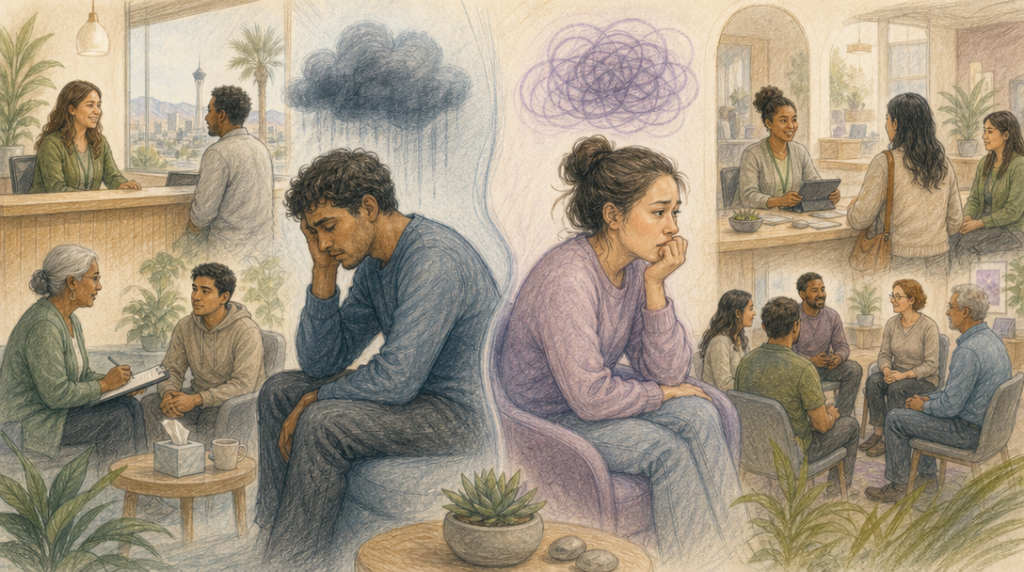
At Miracle Minds Therapy, clients can ask about depression counseling, individual therapy, teletherapy, and depression medication support.
What Is Anxiety?
Anxiety is more than normal stress. It can include fear, worry, panic, restlessness, and body symptoms that feel hard to control. Anxiety may make someone avoid people, places, responsibilities, school, work, driving, appointments, or social situations.
NIMH lists several anxiety disorders, including generalized anxiety disorder, panic disorder, social anxiety disorder, and phobia-related disorders. Anxiety can affect the mind and body, which is why some people feel physical symptoms even when nothing dangerous is happening.
Anxiety may feel like:
- Constant worry
- Racing thoughts
- Panic attacks
- Feeling on edge
- Muscle tension
- Chest tightness
- Stomach problems
- Trouble sleeping
- Trouble focusing
- Irritability
- Avoiding certain places or people
- Fear of being judged
- Feeling like something bad will happen
- Needing repeated reassurance
What this means: anxiety can make life feel unsafe even when you are not in immediate danger. The body may react like there is a threat, even when the threat is a thought, memory, task, conversation, or place.
At Miracle Minds Therapy, clients can ask about anxiety therapy, individual therapy, group therapy, teletherapy, and anxiety medication support.
Depression vs Anxiety: The Main Difference
Depression vs anxiety often comes down to emotional direction.
Depression often pulls a person down. It can feel like heaviness, numbness, low motivation, sadness, fatigue, guilt, or hopelessness.
Anxiety often pushes a person into fear. It can feel like worry, panic, tension, racing thoughts, and a strong need to avoid danger or prevent something bad from happening.
A simple way to think about it:
- Depression often says, “I cannot do this.”
- Anxiety often says, “What if something bad happens?”
- Depression often drains energy.
- Anxiety often creates nervous energy.
- Depression often leads to withdrawal.
- Anxiety often leads to avoidance.
- Depression may make the future feel hopeless.
- Anxiety may make the future feel threatening.
The real question is not which label fits perfectly. The real question is how the symptoms affect your life and what care can help.
Some people need depression counseling. Some need anxiety therapy. Some need both. Some may benefit from therapy and psychiatric medication management together.
How Depression and Anxiety Can Overlap
Depression and anxiety often overlap. The CDC notes that many people who experience depression also have other mental health conditions, and anxiety disorders often go hand in hand with depression.
This overlap can feel confusing. You might feel tired and restless at the same time. You might want to isolate but also worry about being alone. You might sleep too much one day and feel too anxious to sleep the next. You might lose interest in life while also worrying constantly about bills, school, work, family, health, or the future.
Depression and anxiety can both cause:
- Sleep problems
- Trouble focusing
- Irritability
- Low motivation
- Fatigue
- Restlessness
- Avoidance
- Appetite changes
- Body tension
- Social withdrawal
- Trouble keeping up with responsibilities
Let’s break it down. Depression and anxiety are different, but they can feed each other. Anxiety can wear you down until depression grows. Depression can make problems pile up, which can increase anxiety. A person may need care for both at the same time.
Miracle Minds Therapy can help clients sort through symptoms during intake and build a care plan that fits.
Common Signs of Depression
Depression may show up slowly. Some people do not notice it at first. They may just feel tired, irritated, disconnected, or behind on everything.
You may be dealing with depression if you notice:
Low Mood or Numbness
You may feel sad, empty, flat, or emotionally numb. Some people do not cry. They just stop feeling connected.
Loss of Interest
Things that used to feel enjoyable may feel pointless or exhausting. This can include hobbies, friendships, family time, school, work, music, food, exercise, or faith routines.
Low Energy
Depression can make the body feel heavy. Even small tasks can feel overwhelming.
Sleep Changes
Some people sleep much more than usual. Others cannot sleep well at all.
Appetite Changes
Depression may lead to eating much more or much less than normal.
Guilt or Worthless Thoughts
A person may feel like a burden, failure, or disappointment, even when loved ones do not see them that way.
Hopeless Thoughts
Depression can make it hard to imagine things improving. If hopeless thoughts include suicide or self-harm, call or text 988 right away.
Bottom line: depression is treatable. You do not have to wait until symptoms become severe before asking for help.
Common Signs of Anxiety
Anxiety often feels like the mind and body are stuck in alarm mode. The worry may feel bigger than the situation, or it may stay long after the stressful event has passed.
You may be dealing with anxiety if you notice:
Constant Worry
You may worry about work, school, health, money, family, safety, relationships, or things that have not happened.
Panic Attacks
Panic can include racing heart, chest tightness, shortness of breath, shaking, dizziness, sweating, nausea, and fear of losing control.
Avoidance
You may avoid stores, driving, school, work, appointments, social events, phone calls, or conflict because anxiety feels too strong.
Body Tension
Anxiety can show up as tight shoulders, jaw clenching, headaches, stomach problems, or muscle pain.
Trouble Sleeping
Anxiety can make the mind race at night. You may replay conversations, plan for worst-case scenarios, or feel unable to relax.
Reassurance Seeking
You may ask for reassurance again and again but still feel worried soon after.
Here’s what matters: anxiety is not weakness. It is a mental health concern that can be treated with therapy, coping skills, medication support when fitting, and a steady care plan.
Can You Have Depression and Anxiety at the Same Time?
Yes. Many people have depression and anxiety at the same time. This can happen for many reasons, including stress, trauma, grief, family conflict, school pressure, work stress, medical concerns, substance use, housing problems, or long-term untreated symptoms.
You may have both if you:
- Feel sad and worried most days
- Feel tired but restless
- Sleep poorly because of worry
- Avoid tasks, then feel guilty
- Feel hopeless and panicked
- Isolate but fear being alone
- Use alcohol or drugs to calm down
- Feel overwhelmed by basic responsibilities
- Have both depression symptoms and panic symptoms
Mayo Clinic notes that anxiety can happen with other mental health problems, including depression and alcohol or drug misuse, which can make diagnosis more challenging. That is why a professional assessment can help.

Now here’s the thing: you do not need to decide on your own whether it is depression, anxiety, trauma, ADHD, substance use, or something else. You can tell the provider what you feel, and the provider can help sort through it.
Depression vs Anxiety in Children and Teens
Children and teens may not describe symptoms the way adults do. A child may say their stomach hurts. A teen may seem angry, shut down, or hard to reach. Some young people show depression and anxiety through behavior rather than words.
Depression in children and teens may look like:
- Irritability
- Crying often
- Sleeping more
- Falling grades
- Loss of interest
- Pulling away from friends
- Low motivation
- Feeling worthless
- Talking about death
- Self-harm concerns
Anxiety in children and teens may look like:
- School refusal
- Frequent stomachaches or headaches
- Panic before tests or events
- Fear of being judged
- Trouble sleeping alone
- Repeated reassurance seeking
- Avoiding friends
- Meltdowns before appointments
- Perfectionism
- Worry about family safety
Miracle Minds Therapy supports children and teens through:
- Individual therapy
- Family therapy
- Group therapy
- Anxiety therapy
- Depression counseling
- School-based program
- ADHD medication support
If your child or teen is changing in a way that worries you, ask for help early. You do not need to know the exact diagnosis before calling.
Depression vs Anxiety in Adults and Elders
Adults may try to push through depression or anxiety because they have work, bills, children, caregiving, school, or family responsibilities. Elders may dismiss symptoms as part of aging, grief, health problems, or loneliness.
Depression in adults and elders may include:
- Pulling away from family
- Low energy
- Trouble caring for the home
- Poor sleep
- Loss of interest
- Irritability
- Feeling like a burden
- Grief that feels unbearable
- Not taking medication as directed
- Hopeless thoughts
Anxiety in adults and elders may include:
- Worry about health
- Fear of falling
- Panic symptoms
- Avoiding appointments
- Fear of leaving home
- Trouble sleeping
- Constant checking
- Tension
- Trouble relaxing
Depression and anxiety can affect people at any age. Support can still help, even if symptoms have been present for years.
Miracle Minds Therapy serves children, teens, adults, and elders in North Las Vegas, NV & Las Vegas, NV.
When to Ask for Professional Help
It may be time to ask for help when depression or anxiety affects daily life, relationships, school, work, sleep, health, parenting, or safety.
Ask for help if:
- Symptoms last more than a couple of weeks
- Worry feels hard to control
- Sadness or numbness does not lift
- Panic attacks keep happening
- You miss school, work, or appointments
- You stop caring for yourself
- You avoid normal activities
- Family conflict increases
- You use substances to cope
- You feel hopeless
- You have thoughts of self-harm or suicide
- A child or teen is struggling
- Medication side effects are present
- You need refills or medication review
Depression vs anxiety can be hard to untangle alone. A therapist or psychiatric provider can help you understand what is happening and what kind of care fits.
Call Miracle Minds Therapy at (702) 888-6300 or visit https://mmtnv.org/contact-us to schedule.
Therapy Options for Depression and Anxiety
Therapy can help with both depression and anxiety. It gives you a place to talk, learn coping tools, understand patterns, and build a plan for daily life.
Miracle Minds Therapy offers several therapy services in North Las Vegas, NV & Las Vegas, NV.
Anxiety Therapy
Anxiety therapy may help with worry, panic, fear, avoidance, racing thoughts, and body symptoms.
Depression Counseling
Depression counseling may help with sadness, numbness, low energy, isolation, guilt, hopeless thoughts, and daily functioning.
Individual Therapy
Individual therapy gives one person private support. This may help if symptoms are personal, complex, or tied to trauma, grief, family stress, or relationships.
Group Therapy
Group therapy can help reduce isolation. It gives people a guided space to learn skills and hear from others facing similar struggles.
Family Therapy
Family therapy can help when depression or anxiety affects the whole home. It may support parents, teens, caregivers, couples, and relatives.
Trauma Therapy
Trauma therapy can help when anxiety or depression is connected to past or ongoing painful experiences.
Teletherapy
Teletherapy may help if transportation, childcare, mobility, anxiety, or work schedules make office visits harder.
Therapy does not require perfect words. You can begin with, “I feel anxious and depressed, and I need help.”
Medication Support for Depression and Anxiety
Some people do well with therapy only. Others benefit from medication support. Many people use therapy and medication together.
NIMH explains that mental health medications may be used with psychotherapy, and that people can respond differently to the same medication. Mayo Clinic notes that antidepressants may be used to treat depression and anxiety, and that anti-anxiety medications may help with anxiety disorders.
Miracle Minds Therapy offers:
- Psychiatric evaluation
- Psychiatric medication management
- Medication review and refills
- Anxiety medication support
- Depression medication support
- Bipolar disorder medication support
- ADHD medication support
- Psychosis medication support
Medication support may help if:
- Symptoms are severe
- Therapy helps but symptoms remain strong
- Sleep is badly affected
- Panic attacks continue
- Depression is not lifting
- Medication side effects are present
- Refills are hard to manage
- A past medication stopped working
Medication is not right for everyone, but it can be helpful for some people. A psychiatric provider can talk with you about options, side effects, safety, and follow-up.
Substance Use, Depression, and Anxiety
Substance use can make depression vs anxiety more complicated. Some people use alcohol, cannabis, pills, opioids, stimulants, or other substances to calm anxiety, numb depression, sleep, or escape painful thoughts. Over time, substances can make symptoms worse.
You may need support if:
- You use substances to relax
- You use substances to sleep
- You feel depressed after using
- Anxiety increases after using
- You miss medication doses
- You mix substances with medication
- Family members are worried
- You have cravings
- You have tried to stop but cannot
Miracle Minds Therapy offers substance use care in North Las Vegas, NV & Las Vegas, NV, including:
- Drug treatment
- Addiction counseling
- Outpatient substance use treatment
- IOP
- MAT
- Dual diagnosis
- Relapse prevention
- Recovery support
If mental health symptoms and substance use are both present, ask about dual diagnosis care. Honest information helps the team build a safer plan.
Medicaid and Low-Cost Care Options
Cost can stop people from getting help for depression and anxiety. Miracle Minds Therapy accepts Medicaid and helps clients ask about lower-cost options.
Clients in North Las Vegas, NV & Las Vegas, NV can ask about:
Daily life stress can also make depression and anxiety worse. Miracle Minds Therapy can help connect clients with support for:
- Low-income housing help
- Homeless services help
- Food and SNAP help
- Utility and electric bill help
- Transportation help
- WIC and new mothers resources
- Free diapers and baby supplies
- Job and workforce help
Mental health care is easier to keep up with when food, housing, transportation, benefits, and family needs are not standing in the way.
Crisis Support and Safety
Depression and anxiety can become serious. If you are thinking about suicide, self-harm, or harming someone else, call or text 988 right away. If there is immediate danger, call 911 or go to the nearest emergency room.
Seek urgent help if you:
- Feel unable to stay safe
- Have a suicide plan
- Have self-harm injuries
- Hear voices telling you to hurt yourself or others
- Feel out of control
- Have not slept for days and feel unusually energized or risky
- Are using substances in a dangerous way
- Feel scared you may hurt someone
Nevada 988 offers 24/7 support for people in emotional distress, suicidal crisis, or substance use-related distress. SAMHSA’s National Helpline also offers free, confidential treatment referral and information for people and families facing mental health or substance use concerns.
If symptoms are not an emergency but you need care soon, call Miracle Minds Therapy at (702) 888-6300.
How to Start Care With Miracle Minds Therapy
Starting care can be simple.
Step 1: Call Miracle Minds Therapy
Call (702) 888-6300 Monday through Friday, 9 AM to 5:30 PM. You can also visit https://mmtnv.org/contact-us.
Step 2: Say What You Are Feeling
You can say:
- “I think I have depression.”
- “I think I have anxiety.”
- “I feel both anxious and depressed.”
- “I have panic attacks.”
- “I cannot sleep.”
- “My child or teen needs help.”
- “I need medication support.”
- “I have Medicaid.”
- “I need low-cost care.”
- “I need substance use support too.”
Step 3: Complete Intake
The intake helps the team understand symptoms, safety needs, age, treatment history, Medicaid status, medication needs, substance use concerns, and daily stressors.
Step 4: Build a Care Plan
Your care plan may include therapy, psychiatry, medication support, teletherapy, group therapy, family therapy, school-based care, substance use treatment, or social-services navigation.
Step 5: Keep Talking About What Works
Depression and anxiety can change over time. Tell your provider if symptoms get better, worse, or different. Tell them about side effects, missed doses, substance use, safety concerns, or life changes.
Depression vs anxiety does not have to stay confusing. Miracle Minds Therapy can help clients in North Las Vegas, NV & Las Vegas, NV understand symptoms and take the next step toward care.
Call (702) 888-6300 or visit https://mmtnv.org/contact-us to schedule.
FAQs About Depression vs Anxiety
1. What is the difference between depression and anxiety?
Depression often causes sadness, numbness, low energy, loss of interest, guilt, and hopeless thoughts. Anxiety often causes worry, panic, racing thoughts, tension, fear, and avoidance. Many people have both.
2. Can depression and anxiety happen at the same time?
Yes. Depression and anxiety can happen together. A person may feel tired, sad, worried, restless, avoidant, and overwhelmed at the same time.
3. How do I know if I need therapy for depression or anxiety?
You may need therapy if symptoms affect sleep, work, school, relationships, parenting, daily tasks, or safety. You do not need to know the exact diagnosis before asking for help.
4. Does Miracle Minds Therapy treat depression and anxiety?
Yes. Miracle Minds Therapy offers depression counseling, anxiety therapy, psychiatry, medication support, teletherapy, and social-services navigation.
5. Can medication help with depression or anxiety?
Medication may help some people with depression or anxiety. Miracle Minds Therapy offers psychiatric medication management, anxiety medication support, and depression medication support.
6. Does Miracle Minds Therapy accept Medicaid?
Yes. Miracle Minds Therapy accepts Medicaid and helps clients ask about Medicaid help, Medicaid provider help, and the Sliding Fee Discount Program.
7. How do I schedule help for depression or anxiety?
Call Miracle Minds Therapy at (702) 888-6300 or visit https://mmtnv.org/contact-us. Ask about depression vs anxiety, therapy, psychiatry, Medicaid, teletherapy, or immediate openings.
Sources
- Depression, National Institute of Mental Health, No publication date listed, https://www.nimh.nih.gov/health/topics/depression
- Anxiety Disorders, National Institute of Mental Health, Last reviewed December 2024, https://www.nimh.nih.gov/health/topics/anxiety-disorders
- Mental Health Conditions: Depression and Anxiety, Centers for Disease Control and Prevention, No publication date listed, https://www.cdc.gov/tobacco/campaign/tips/diseases/depression-anxiety.html
- Anxiety Disorders: Diagnosis and Treatment, Mayo Clinic, 2025, https://www.mayoclinic.org/diseases-conditions/anxiety/diagnosis-treatment/drc-20350967
- Mental Illness: Diagnosis and Treatment, Mayo Clinic, December 13, 2022, https://www.mayoclinic.org/diseases-conditions/mental-illness/diagnosis-treatment/drc-20374974
- Nevada 988, Nevada 988, No publication date listed, https://nevada988.org/
- SAMHSA’s National Helpline, Substance Abuse and Mental Health Services Administration, Last updated June 9, 2023, https://www.samhsa.gov/find-help/helplines/national-helpline
- Depression Counseling, Miracle Minds Therapy, No publication date listed, https://mmtnv.org/therapy/depression-counseling/
- Anxiety Therapy, Miracle Minds Therapy, No publication date listed, https://mmtnv.org/therapy/anxiety-therapy/